Need some advice?
Leave us your contact details so we can call you back.
I want to be contacted by an expert

Electrical failures, abnormal overheating and fire outbreaks remain among the most critical risks affecting industrial sites. Electrical cabinets represent one of the most sensitive points of vulnerability, particularly as energy demand continues to rise and installations become increasingly complex across the Middle East. In this evolving environment, traditional inspection methods are reaching their limits.
Artificial intelligence now enables continuous predictive maintenance, allowing operators to anticipate failures before they impact personnel safety or disrupt operations.

Leave us your contact details so we can call you back.
I want to be contacted by an expertElectrical cabinets form the operational core of industrial facilities, ensuring power distribution, protection and control. Despite their importance, they remain one of the leading sources of incidents across industrial environments.
Available data consistently shows that a significant proportion of industrial incidents originate from electrical causes, with electrical cabinets frequently identified as the primary source of fire outbreaks. Across the Middle East, the financial impact of such incidents can be substantial, not only in terms of equipment damage but also due to production downtime and operational disruption.

Industrial operators rely on several mechanisms to manage electrical risks, yet each presents inherent limitations.
Periodic regulatory inspections help identify abnormal temperature rises that could lead to failure or fire. While these inspections are essential and widely recognized as best practice, their intermittent nature limits their ability to detect critical issues at the right moment.
Fire protection systems such as detection, sprinkler systems and suppression solutions are designed to respond once an incident has already occurred. Although they effectively reduce the extent of damage, they almost always result in operational downtime, significant repair costs, and in some cases substantial business interruption.
Insurance mechanisms may mitigate financial losses but do not prevent incidents or production disruptions. This highlights the need to move further upstream in risk prevention strategies.
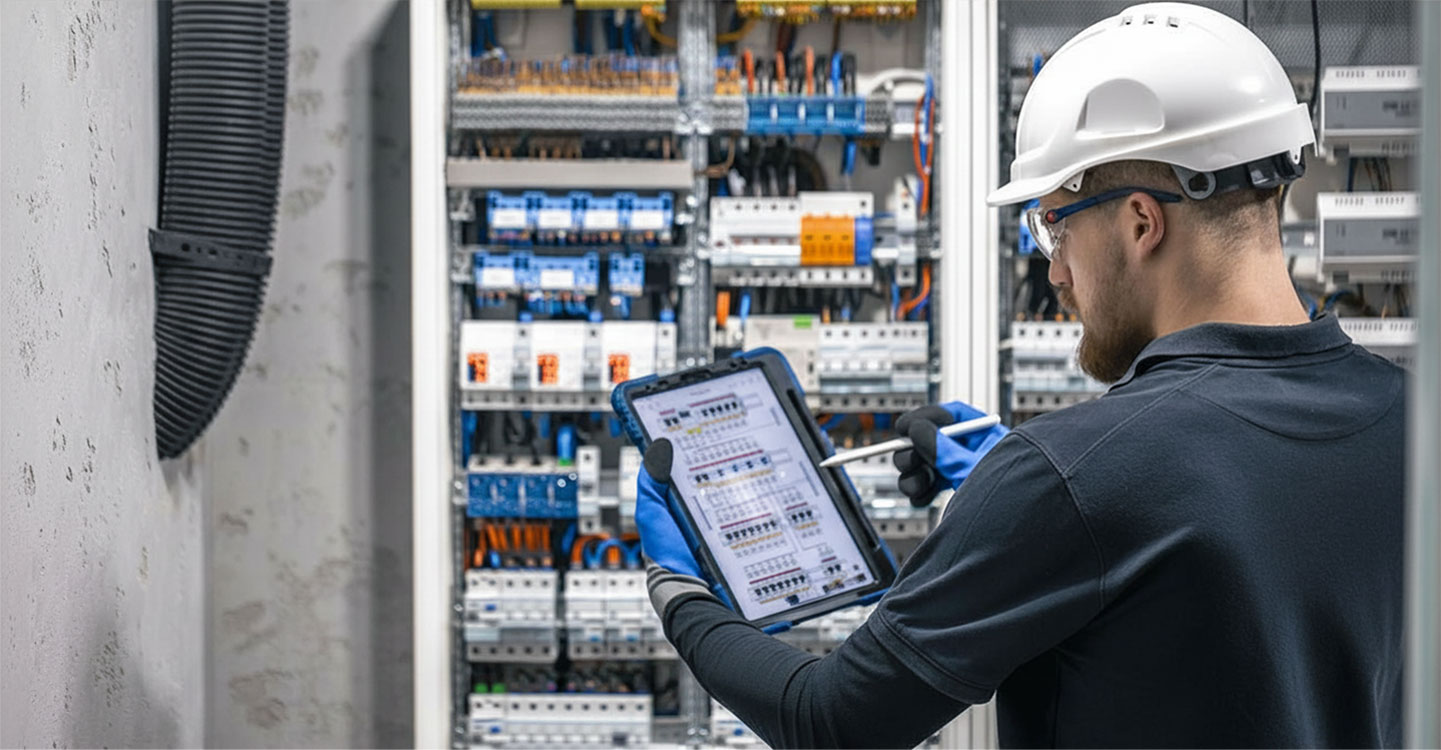
As electrical systems grow more complex and pressure on energy availability continues to rise, occasional monitoring is no longer sufficient. Industrial operators now need continuous visibility into the health of their electrical equipment.
Predictive monitoring addresses several major challenges:
This approach extends production system supervision to include the health of the electrical installation, enabling a shift from a reactive model to a truly predictive one.
As electrical systems grow more complex and pressure on energy availability continues to rise, occasional monitoring is no longer sufficient. Industrial operators now need continuous visibility into the health of their electrical equipment.
Predictive monitoring addresses several major challenges:
This approach extends production system supervision to include the health of the electrical installation, enabling a shift from a reactive model to a truly predictive one.
Implementing an AI driven predictive monitoring solution delivers measurable advantages.
In a region where industrial growth, large-scale infrastructure projects, and rising energy demand are reshaping operational environments, ensuring the resilience of electrical systems is becoming a strategic priority.
Leveraging advanced technologies such as AI-driven predictive monitoring enables industrial stakeholders to move beyond compliance and adopt a more proactive approach to risk management. This approach enhances safety, protects critical assets, and supports business continuity across increasingly complex installations.
At SOCOTEC Middle East, our experts support organizations across the region with tailored fire risk engineering, inspection, and monitoring solutions. We help clients anticipate risks and secure their critical electrical infrastructure in line with local standards and operational challenges.
Looking to implement predictive monitoring for your electrical infrastructure?
Leave us your contact details so we can call you back.
I want to be contacted by an expert